


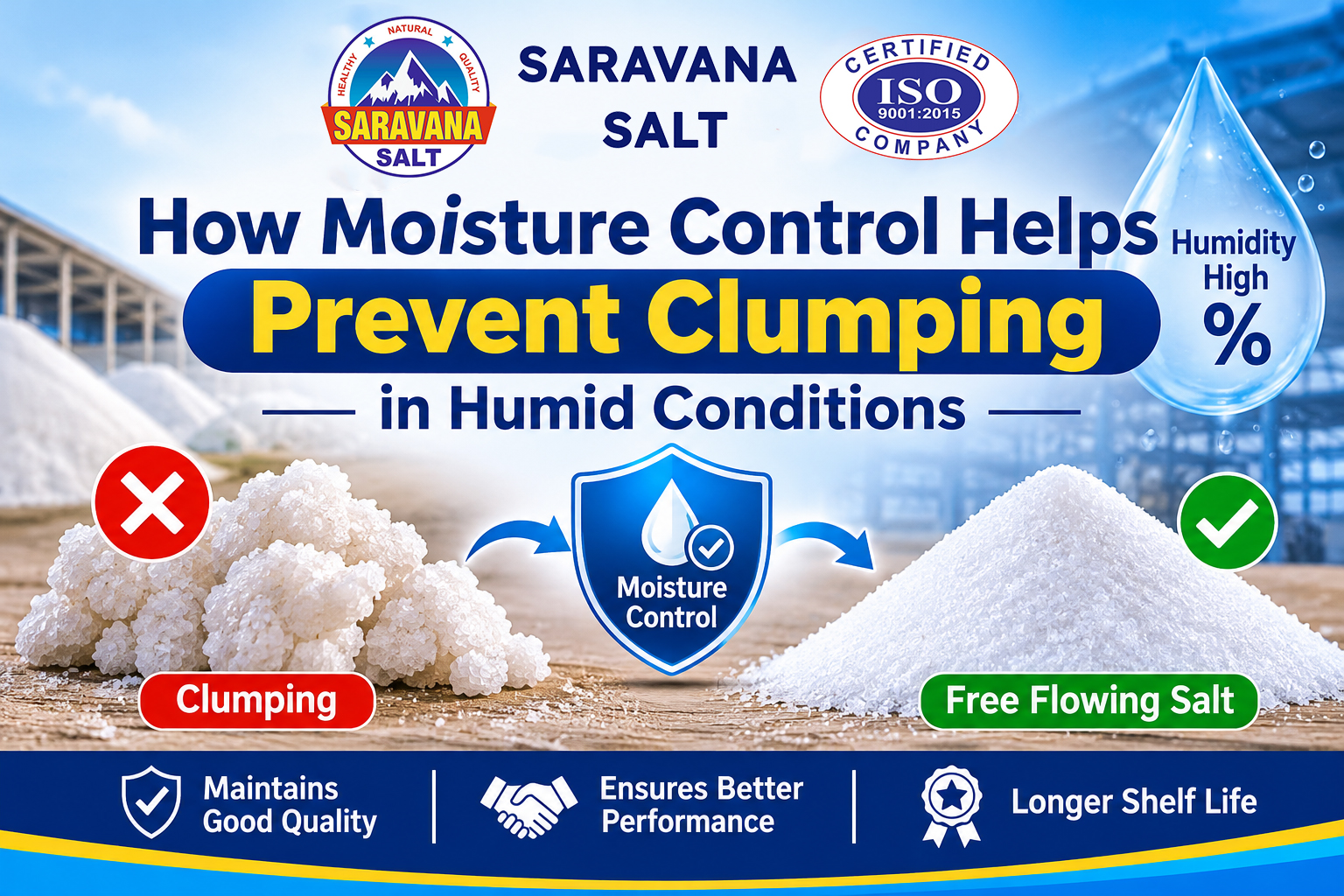
How Moisture Control Prevents Salt Clumping in Humid Conditions
Introduction
Free flow iodised salt plays an important role in maintaining salt quality, especially in humid conditions. Excess moisture in the air can cause salt crystals to stick together, resulting in unwanted clumping. Proper moisture control helps maintain the smooth texture, consistent quality, and easy flow of salt during storage and usage.
Free flow iodised salt is specially processed to maintain a smooth, free-flowing texture, making it suitable for everyday cooking, food processing, and commercial applications. Understanding how moisture control works can help manufacturers maintain consistent salt quality, especially in humid environments.
Why Does Salt Develop Clumps in Humid Conditions?
Salt naturally attracts moisture when exposed to humid air. This process can cause individual salt crystals to stick together, resulting in hard or soft lumps.
Some common reasons for salt clumping include:
- High Humidity: Excess moisture in the atmosphere can affect salt crystals.
- Improper Storage: Leaving salt containers open allows moisture to enter.
- Poor Packaging: Low-quality packaging may allow moisture to pass through.
- Temperature Changes: Temperature fluctuations can contribute to condensation inside storage containers.
- Inadequate Processing: Improper drying and moisture management during manufacturing can affect the final product.
These factors can reduce the free-flowing properties of salt and make handling more difficult.
How Moisture Control Prevents Salt Clumping
Moisture control is essential for maintaining the physical quality of salt. Manufacturers follow different processing and storage practices to minimise moisture exposure.
1. Controlled Drying Process
Proper drying helps remove excess moisture from salt crystals before packaging. Maintaining suitable drying conditions helps achieve consistent moisture levels and improves the product's storage stability.
2. Use of Food-Grade Anti-Caking Agents
Food-grade anti-caking agents, where permitted, help reduce the tendency of salt crystals to stick together. They improve the flow properties of salt and help maintain a loose, granular texture during storage and handling.
3. Moisture-Resistant Packaging
Packaging plays a significant role in protecting salt from environmental humidity. High-quality moisture-resistant packaging helps prevent external moisture from entering and maintains the product's quality for longer periods.
4. Proper Storage Conditions
Salt should be stored in clean, dry, and well-ventilated areas. Keeping packages sealed and away from direct moisture exposure helps preserve the texture and quality of the product.
5. Quality Testing and Monitoring
Regular quality checks help manufacturers monitor moisture content, salt purity, and product consistency. These checks ensure that the final product meets the required quality standards.
Benefits of Free Flow Iodised Salt
Choosing properly processed free flow iodised salt offers several advantages for consumers and food manufacturers.
- Easy Handling: Flows smoothly during measuring, dispensing, and mixing.
- Reduced Clumping: Proper moisture management and suitable processing help minimise unwanted lumps.
- Consistent Texture: Maintains a uniform granular appearance.
- Better Storage Stability: Appropriate packaging helps protect product quality.
- Convenient Usage: Suitable for household cooking and various food processing applications.
Additionally, iodine fortification helps provide an important dietary source of iodine when consumed as part of a balanced diet.
Applications of Free Flow Iodised Salt
Free-flowing iodised salt is widely used across different sectors because of its convenient handling and consistent texture.
Common applications include:
- Household cooking and seasoning.
- Food manufacturing and processing.
- Snack and packaged food production.
- Commercial kitchens and restaurants.
- Food preparation and ingredient blending.
Its easy dispensing and consistent flow make it a practical ingredient for both domestic and industrial applications.
Frequently Asked Questions
Why does salt become hard in humid weather?
Salt absorbs moisture from humid air, causing crystals to stick together and form lumps.
How does moisture-resistant packaging help salt?
It limits exposure to external humidity and helps maintain the salt's texture and quality during storage.
What makes free flow iodised salt different from regular salt?
Free-flowing iodised salt is processed to maintain better flow properties and contains added iodine as per applicable food standards.
How should iodised salt be stored?
Store it in an airtight container in a cool, dry place, away from moisture and direct sunlight.
Conclusion
Moisture control is an essential part of maintaining salt quality in humid conditions. From controlled drying and appropriate processing to moisture-resistant packaging and proper storage, every step contributes to reducing unwanted clumping.
Choosing high-quality free flow iodised salt ensures convenient handling, consistent texture, and better storage performance. For manufacturers and consumers alike, proper moisture management helps maintain the quality and usability of salt in different environmental conditions.
To stay updated with the latest products, export activities, and company updates, follow Saravana Salt on Facebook: https://www.facebook.com/saravanasaltexporter
