


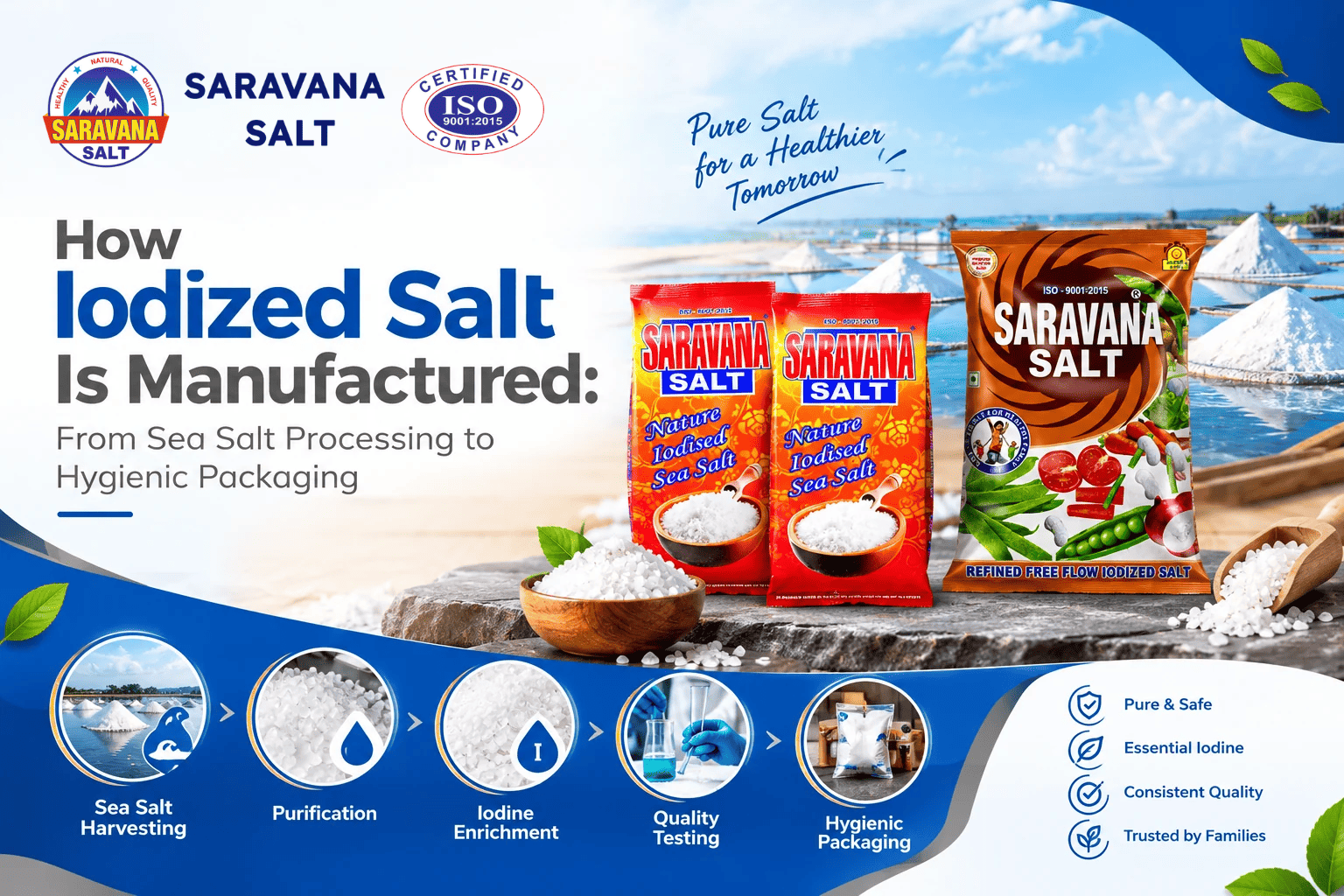
How Iodized Salt Is Manufactured: From Sea Salt Processing to Hygienic Packaging
A Clear Path from Sea Salt to Iodized Perfection
Salt is a staple that flavors, preserves, and sustains. Yet the journey from raw sea salt to iodized salt destined for homes and kitchens is a carefully choreographed process that blends science, hygiene, and quality control. In this comprehensive guide, we explore the entire lifecycle of iodized salt, tracing each step from sea salt extraction to the final hygienic packaging that keeps Saravana Salt at peak freshness.
Harvesting Sea Salt: The First Step in a Delicate Alchemy
The initial phase of iodized salt production begins at the shoreline, where sea water is captured and concentrated to form sea salt. Creating an optimal sea salt base is critical because it impacts dissolving speed, flavor neutrality, and consistency in iodization.
Purification and Refinement: Removing Impurities for Safety and Taste
Purification transforms raw sea salt into a product free from unwanted minerals and contaminants while preserving its essential sodium chloride composition. The goal is to achieve a clean salt that dissolves readily and blends evenly with iodine without introducing off-flavors.
At Saravana Salt, purification steps are tightly controlled to meet food-grade standards and to support safe iodization. The purification process, when executed properly, yields a baseline that elevates the final iodized salt’s purity and consumer experience.
Iodization: The Core Health Benefit Powered by Precise Dosing
Iodization is the pivotal step that transforms ordinary sea salt into a nutrient-enriched product essential for thyroid function and overall health. This process involves adding a carefully calibrated amount of iodine, typically in the form of potassium iodate or potassium iodide, to achieve a specified iodine concentration, depending on regional guidelines.
Commonly around 20–40 micrograms of iodine per gram of salt.
Quality control measures include regular iodine testing, batch traceability, and adherence to food-grade standards to protect consumer health. The immediate outcome is a fortified product that supports public health while preserving the culinary integrity of salt. In closing, iodization is the defining step that elevates salt from a seasoning to a nutrient-dense staple.
Quality Control: The Backbone of Every Batch
Quality control is the backbone of every iodized salt operation, ensuring each batch meets stringent safety, purity, and labeling standards. This stage involves continuous in-process checks, laboratory tests, and final product inspections to verify iodine content, moisture levels, and absence of contaminants.
Consistency across production runs is critical for consumer confidence, particularly for iodized salt, where nutrient content must stay within defined ranges. At Saravana Salt, you can expect a comprehensive QC framework that encompasses sampling plans, spectroscopic analysis, and standardized SOPs to maintain uniform quality. The emphasis on traceability gives retailers and consumers certainty about the product’s origin and composition. In essence, quality control ensures safety and reliability, transforming each bag of salt into a predictable, trustworthy ingredient for households.
Packaging Design and Hygienic Standards: Protecting Freshness and Potency
Packaging is not merely a container; it is a line of defense against moisture, contaminants, and iodine volatility. Hygienic packaging involves sterile handling, moisture-barrier materials, and air-tight seals that prevent iodine loss and preserve flavor. Packaging specifications also consider user convenience, such as easy-pour designs, clear iodization labels, and tamper-evident features.
For Saravana Salt, packaging is engineered to maintain iodine stability throughout shelf life while delivering a clean, aesthetically appealing product. A well-designed package translates to longer product life, reduced waste, and a satisfying user experience.
Storage, Handling, and Distribution: Keeping Salt Safe from Factory to Feast
After packaging, iodized salt requires careful storage and distribution to preserve quality. Distribution logistics must minimize transit time and protect packaging integrity, reducing the risk of breakage and contamination. In essence, the storage and distribution stage is about safeguarding the product’s promised iodine content and freshness all the way to consumers.
Consumer Experience: Cooking, Health, and Confidence in Every Pinch
Consumers expect a salt that dissolves quickly, blends evenly, and delivers iodine without altering flavor. Transparent labeling, clear usage guidance, and honest declarations about iodine content reinforce consumer trust and brand loyalty. In closing, the consumer experience hinges on taste, reliability, and the health advantages that iodized salt provides.
Frequently Asked Questions
What is iodized salt, and why is iodine added?
Iodized salt contains added iodine to address iodine deficiency in populations, supporting thyroid function and overall health.
How is iodine evenly distributed in salt?
Modern iodization uses precise dosing equipment and thorough mixing to ensure uniform iodine across all grains.
Does iodized salt taste different?
When properly processed, iodized salt should taste similar to non-iodized salt, with minimal perceptible difference.
How should iodized salt be stored?
Store in a cool, dry place away from direct sunlight to preserve iodine potency and prevent clumping.
Conclusion
By comprehending this journey, readers can appreciate the science, care, and responsibility embedded in every pinch of iodized salt that lands on their table. A thoughtful balance of safety, taste, and health makes Saravana Salt a trusted ally in homes and kitchens around the world.
To stay updated with the latest products, export activities, and company updates, follow Saravana Salt on Facebook: https://www.facebook.com/saravanasaltexporter
