


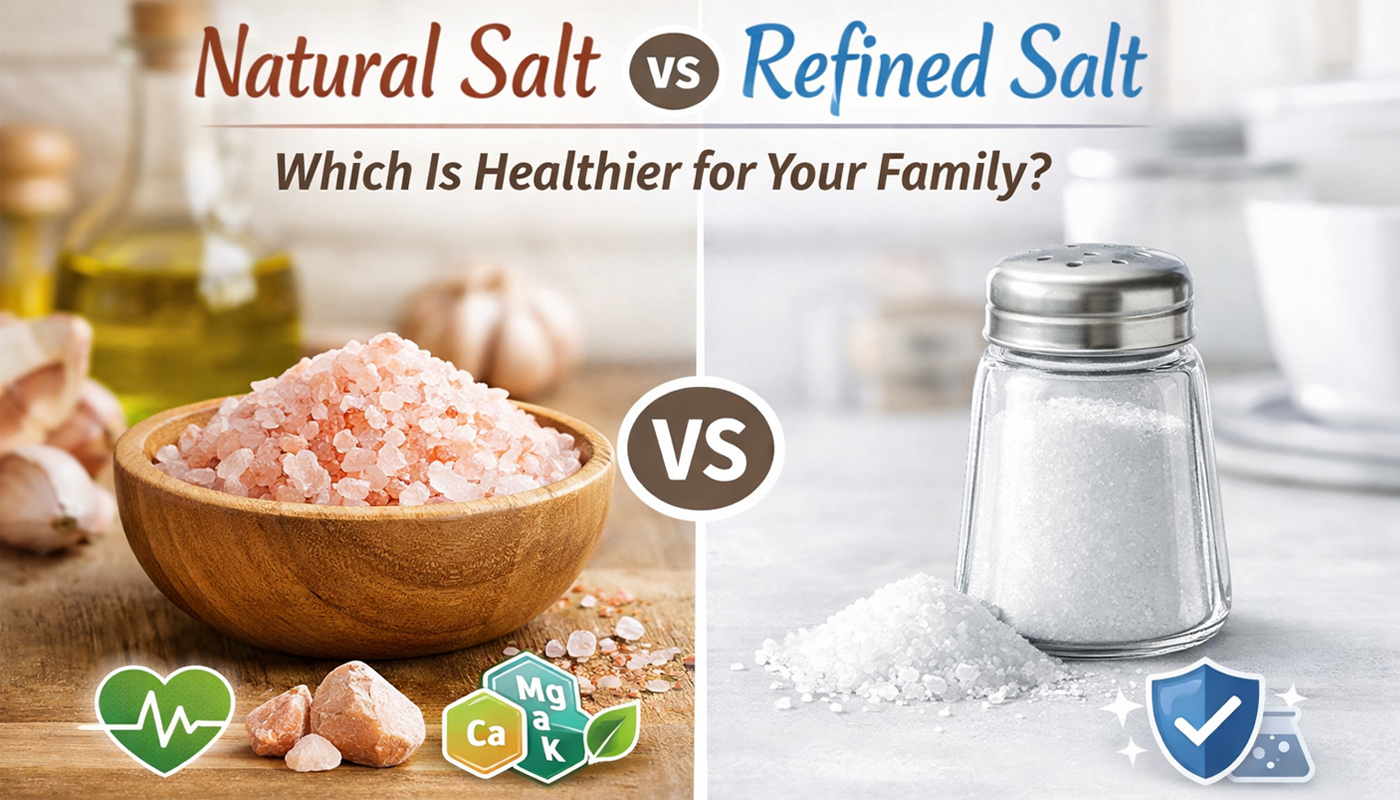
Natural Salt vs Refined Salt: What’s the Healthier Choice for Your Family?
In today’s health-conscious world, choosing the right type of salt is an important decision for many households. While salt is a staple ingredient in everyday cooking, the type you choose can influence both flavor and overall well-being. Understanding Natural salt vs refined salt — what’s the healthier choice for your family? can help families make more informed and balanced dietary choices. Salt plays a vital role in maintaining fluid balance, supporting nerve function, and aiding muscle activity. Despite its importance, not all salt is processed in the same way. The key difference between natural salt and refined salt lies in their composition, processing methods, and nutritional value.What Is Natural Salt?
Natural salt is minimally processed and is typically sourced from seawater or underground salt deposits. It retains trace minerals such as magnesium, potassium, and calcium, which contribute to its distinctive flavor and potential health benefits.
Common varieties include sea salt, rock salt, and Himalayan pink salt. These options are often preferred because they undergo less processing and do not usually contain artificial additives. Many households appreciate natural salt for its richer taste and more traditional production methods, which preserve its original characteristics.
What Is Refined Salt?
Refined salt, commonly known as table salt, undergoes extensive processing to remove impurities and unwanted elements. During this process, most naturally occurring minerals are stripped away, leaving sodium chloride primarily.
To improve texture and shelf life, refined salt is treated with anti-caking agents. It is also often fortified with iodine, an essential nutrient that supports thyroid health and helps prevent iodine deficiency. However, it lacks the additional trace minerals found in natural salt, which is an important factor when considering Natural salt vs refined salt — what’s the healthier choice for your family?.
Key Differences Between Natural and Refined Salt
Understanding the differences between these two types of salt can help households make better decisions:
- Processing: Natural salt is minimally processed, whereas refined salt undergoes chemical refinement
- Mineral Content: Natural salt contains trace minerals; refined salt is mostly pure sodium chloride
- Additives: Refined salt includes anti-caking agents; natural salt generally does not
- Flavor Profile: Natural salt offers a more complex and layered taste
These distinctions play a significant role in determining which type of salt is more suitable for daily consumption.
Health Considerations
Health is one of the main reasons why families compare different types of salt. Although both natural and refined salt contain sodium, excessive intake of either can lead to health concerns such as high blood pressure and cardiovascular issues.
Natural salt provides small amounts of essential minerals, which may contribute to overall wellness. In contrast, iodized refined salt plays a crucial role in preventing iodine deficiency, particularly in regions where iodine intake may be insufficient.
When evaluating natural vs. refined salt, which is healthier for your family? — It is important to focus on maintaining a balanced intake rather than relying entirely on one type.
The Importance of Moderation
Regardless of the type of salt used, moderation remains essential. High sodium consumption is associated with various health conditions, including hypertension and heart disease.
Health professionals recommend limiting daily salt intake and choosing fresh, home-cooked meals over heavily processed foods. Packaged and processed items often contain hidden sodium, which can significantly increase overall consumption. A well-balanced diet is far more beneficial than focusing solely on the type of salt used.
Which Option Is Better for Your Family?
The choice between natural salt and refined salt ultimately depends on individual dietary needs and lifestyle preferences. Natural salt is often favored for its minimal processing and trace mineral content, while refined salt is beneficial for those who require additional iodine in their diet.
Many households adopt a balanced approach by using both types for different purposes. For example, natural salt may be used for cooking and seasoning, while iodized salt ensures adequate iodine intake. This approach helps maintain both flavor and nutritional balance.
Understanding Natural salt vs refined salt — what’s the healthier choice for your family? allows families to make decisions that align with their health goals and everyday cooking practices.
Conclusion
Choosing the right type of salt is an important aspect of maintaining a healthy lifestyle. By exploring natural vs refined salt — what’s the healthier choice for your family? — It becomes easier to understand the strengths and limitations of each option.
Both natural and refined salt offer their own benefits, but the key lies in using them wisely and in moderation. A balanced approach, combined with healthy eating habits, supports long-term well-being and ensures better nutrition for the entire family.
